Part 3 of 3: I Switched on My Conscious—And Found My Sacred Gift

If you want to turn on the light in a pitch-black room, do you stumble around blindly hoping you will bump into the switch by accident? Or do you switch on the torch in your hand first and track down its exact location?
To learn how to wake up our I-Pilot (Our Conscious), it is important to know exactly where to start. Otherwise, we become frustrated, and after going around the room several times and failing to find the light switch, we simply give up.
How Trauma Causes a Bottleneck: Left Brain Underactive and Right Brain Hyperactive
During trauma or the activation of a post-traumatic stress response, our brain undergo a biological shift:
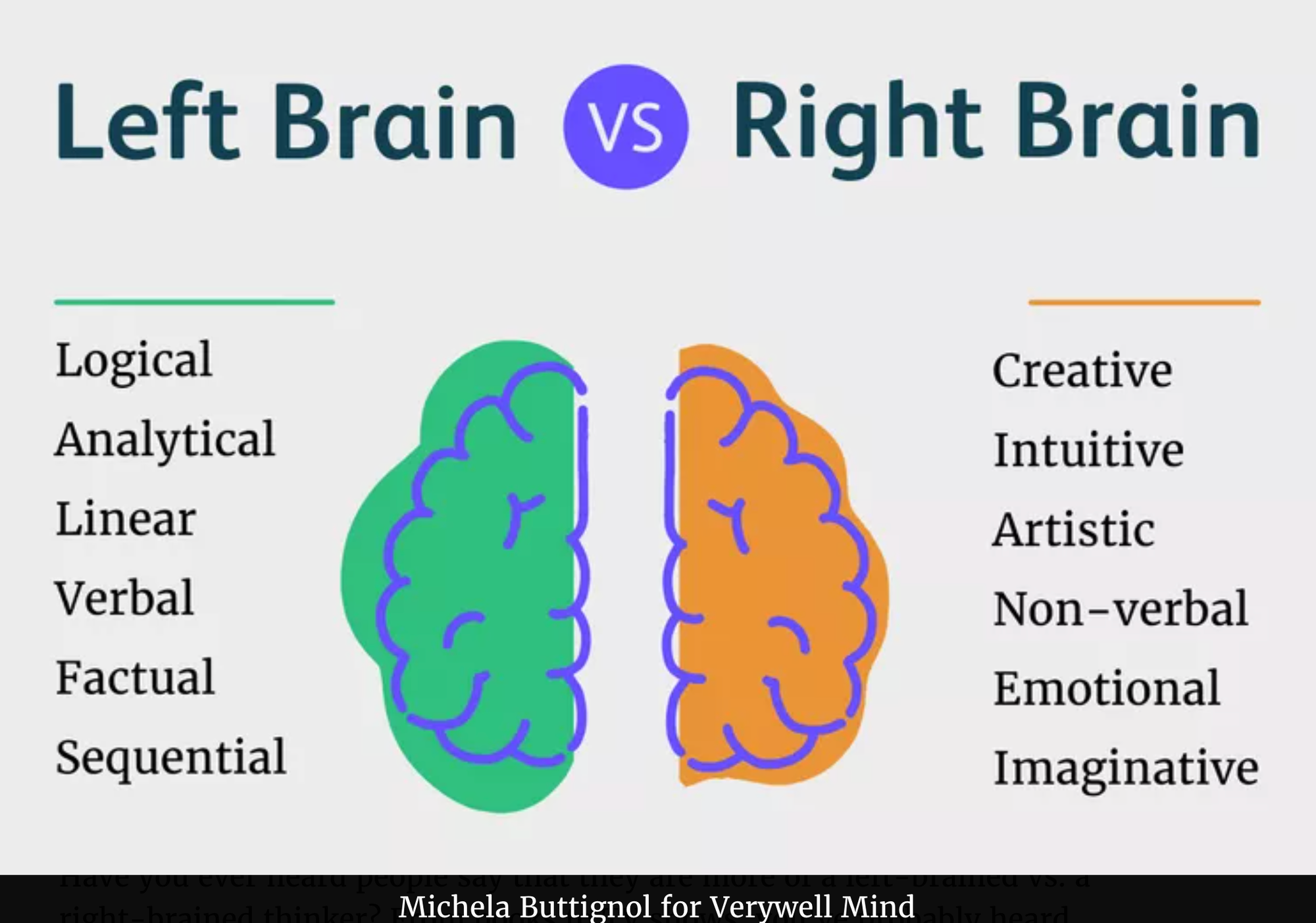
The Overactive Right Brain: The right hemisphere becomes highly hyperactive. This side handles holistic processing, spatial awareness, big-picture thinking, and emotional intelligence. It helps us see the 'forest from the trees', without this vision we cannot heal from our trauma.
The Underactive Left Brain: Specific structural areas of the left hemisphere decrease in activity or shut down entirely. The left brain is responsible for literal, detail-oriented processing, linear logic, mathematical calculations, and the physical formation of language. It helps us see 'the trees from the forest', without this vision we cannot heal from our trauma.
In my personal experience, I realised that in order to wake up my I-Pilot (My Conscious) I needed to develop my big picture vision first, and secondly my ability to look at a massive, overwhelming whole and pick out the individual, important details.
My breakthrough happened when I looked at the functions of the right brain: creativity, intuition, non-verbal communication, emotional intelligence and imagination. I had an "Aha!" moment. I realised these areas were severely underdeveloped. To wake up my conscious and regain my throne, I knew exactly what to do and where to start: I needed to rebuild my imagination.
How Left Brain Logic Causes Trauma Relapse

"Logic will get you from A to B. Imagination will take you everywhere." — Albert Einstein
For years, I tried to heal my trauma using strict, linear logic. I tried to walk from A to B, and B to C.
The problem with logic is that it is slow, rigid, and completely linear. I would make progress from A to D, experience a trauma relapse, and get thrown all the way back to B. Then I would have to burn enormous amounts of energy to push forward again. Sometimes I would make it to H, only to relapse back to A.
I realised that trying to heal trauma through logic would take me multiple lifetimes—lifetimes I simply do not have. If imagination has the capacity to take us everywhere instantly, I thought 'Aha' let me give that a go!
How to Make the Unconscious Conscious: 3 Ways That Worked for Me
Here are three ways that helped me develop my imagination, while having fun and enjoying myself in the process.
- The Perception Shift: Training Our Imagination to See More
Look up the famous "The Old and Young Woman" optical illusion online. It is a single painting that simultaneously contains an old woman and a young woman.
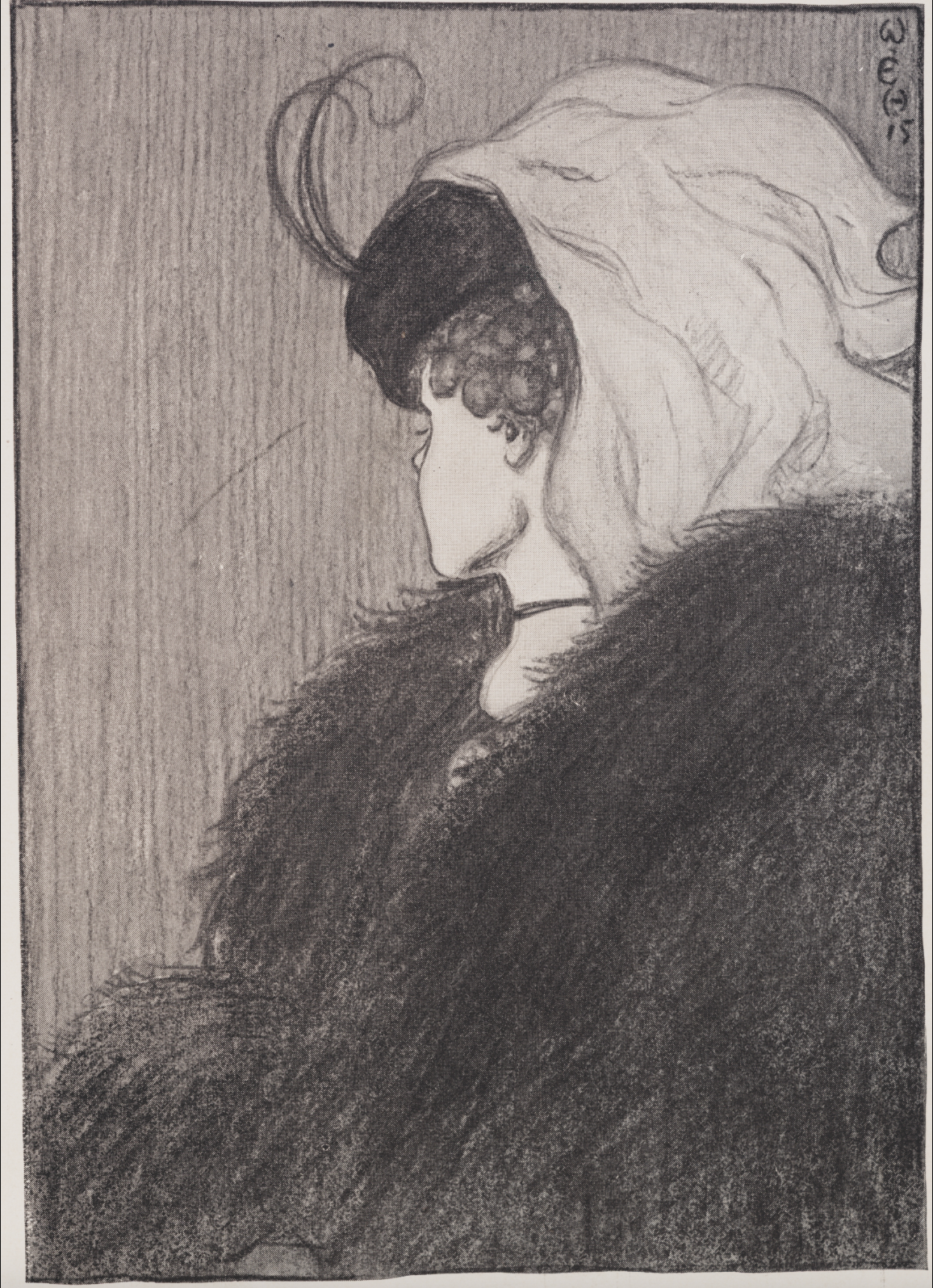
The Exercise: See which woman you spot first, and then try to locate the second. It might take you minutes, hours, or even days of looking to find the second image.
The Purpose: To see both images, you cannot force your brain out of its automatic assumptions to see it. You are actively training your imagination to see alternative realities in the same environment, this happens with intuition and imagination. When you see both images, ask yourself 'How many things that were in front of me have I been missing all this time?'.
- The Universal Law: Every Credit is a Debit (Why Being Good is Bad Sometimes)

Fritz Perls, the co-founder of Gestalt Therapy, identified a profound rule: Every credit is a debit. Every time we seek an external advantage, we pay an internal price:
- The Cost of Expectation: If we spend our life trying to win "credit" (approval) from others, we run up an immediate psychological debt. We pay for that approval by bankrupting our own authenticity.
- The Trade-off of Victimhood: When we play small or play the victim to gain sympathy or control ("credit"), we pay a massive debt by surrendering our maturity and personal power. We abdicate our response-ability, our throne.
- The Exercise: Open your voice journal and ask yourself: What credits do I have, and what are they costing me? For example, when I play small/show lack of confidence for credit (to fit in or come across as non-threatening), what debit does this cost me in (feeling small, not being myself, hiding my power). If being a King is a "credit," how is it also a "debit"? What freedom can an ordinary person enjoy that a King cannot? Did you know you have more freedom than a King in some areas?
- Emotion is the Soundtrack of Our Soul: Giving Our Soul the Lyrics to Sing

What gives our imagination and soul a beautiful soundtrack is our emotion. We need to give our soul the lyrics it needs to sing, dance, cry and emote. Start with the following.
- The Exercise: Learn 10 distinct words for sadness (e.g., melancholy, desolate, somber) and 10 distinct words for happiness (e.g., serene, ecstatic, optimistic). Remember past experiences and try to express your feelings in 'I' statements. For example, 'I was elated when I got that promotion'. 'I I feel wistful when I think about how quiet the house has become, because I loved the energy of our family dinners'.
- The Purpose: Practice describing your internal state using these precise words. There is a vast psychological difference between saying "I am content" and "I am feeling optimistic."
Final Thought:
When we have the words to describe our inner world, we gain the power to consciously shape our destiny, rather than letting our unconscious mind direct us under the guise of "fate''.
A richer vocabulary gives our soul the lyrics it needs to sing, speak, and shape our lives.


